Writing your CV2 min read
How to write a CV with no experience
No job on your record yet? Here is how to build a first CV from your studies, projects and volunteering, section by section, with examples.
Everyone starts with an empty CV. Recruiters who hire for junior roles know it, and they do not expect ten years of career. They look for signs that you learn fast, finish what you start and understand the job. Your studies, projects and volunteering can show all three.
Start by listing everything you have done
Before you open a template, take ten minutes and write down everything, without filtering:
- courses and school projects, especially group work
- internships, even short ones
- volunteering and student clubs
- small jobs: tutoring, shop work, deliveries
- things you built alone: a website, an online shop, a video channel
You will not keep it all. The list is raw material, and it is nearly always longer than people expect.
Open with a short profile
Two or three lines at the top tell the reader who you are and what you want. Name your field, one or two strengths and the role you are after.
Motivated and dynamic student looking for an opportunity.
Final-year accounting student, comfortable with Excel and Sage. Looking for a junior accountant role in a firm in Casablanca.
The second version says something only you can say. The first could be on anyone's CV.
Put education first
When you have no work history, your education is your strongest section, so it goes at the top. Give the degree, the school and the dates. Then add two or three lines that link to the job: relevant courses, a final-year project, a ranking or a grade if it is good.
Turn projects and volunteering into experience
A project is experience if you describe it like a job. Use an action verb, say what you did, and give a result when you know it.
Member of the student association.
Organised 3 career events for 200 students with a team of 5, and found 4 sponsoring companies.
Add the skills the offer asks for
Read the job offer and underline the tools and skills it names. Put the ones you really have in your skills section, with the same words as the offer. Applicant tracking systems (ATS) and recruiters both search for those exact terms.
Leave out vague words such as "serious" or "hard-working". Show them through what you did instead.
Keep the layout simple
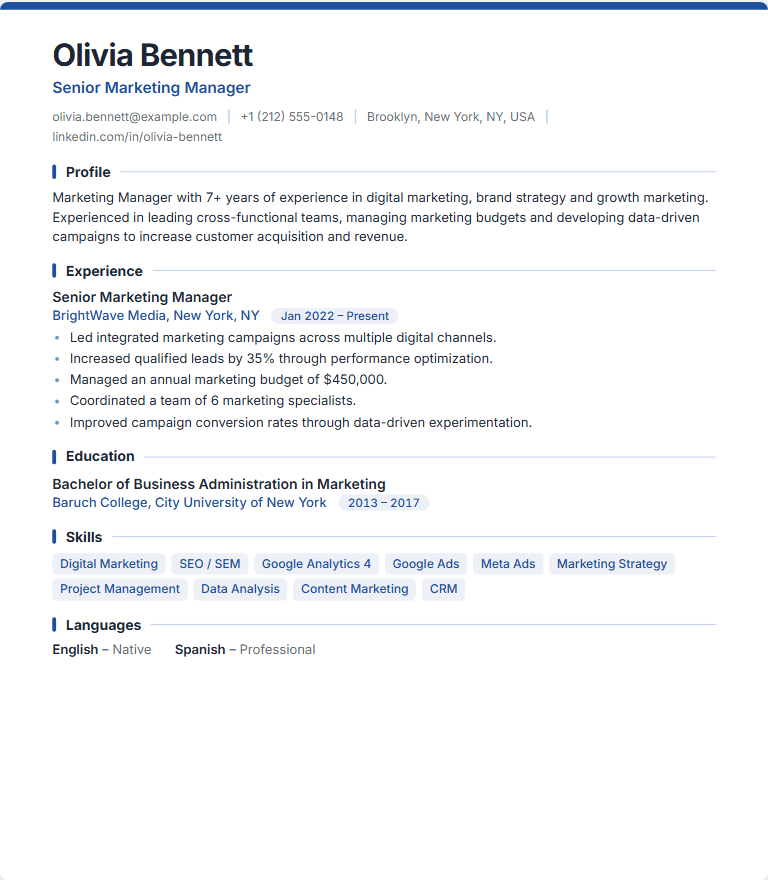
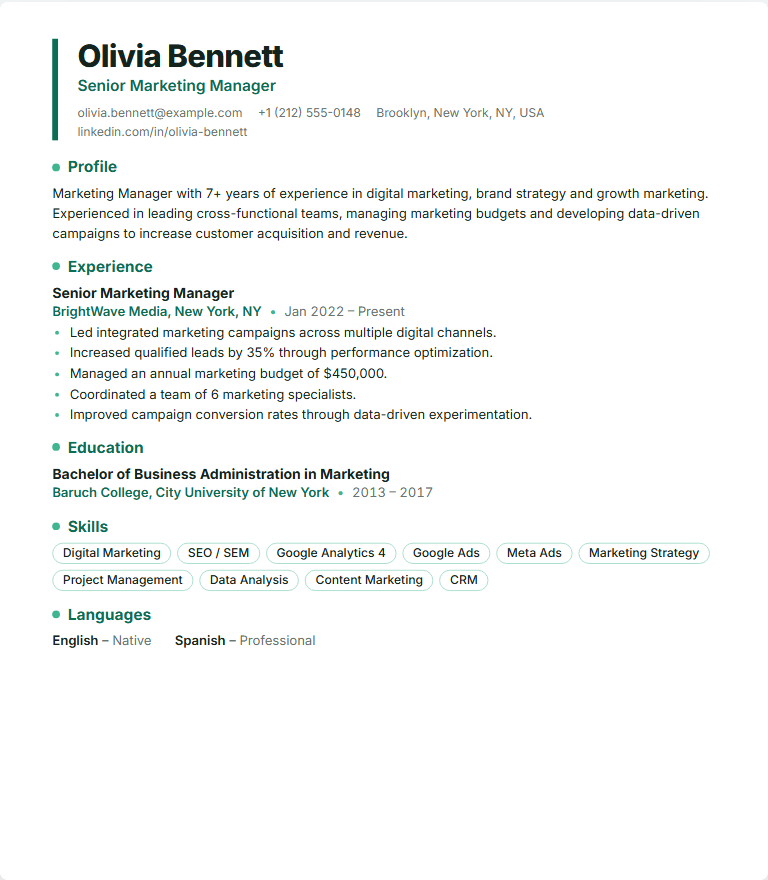
Use one column, standard section titles (Profile, Education, Experience, Skills, Languages) and one page. A simple layout is the one that software reads best, and it lets a recruiter find what they need in a few seconds.
Frequently asked questions
How long should a first CV be?
One page. A recruiter spends a few seconds on a first read, and one well-filled page is easier to scan than two half-empty ones.
Should I write that I have no experience?
No. Never point at what is missing. Show what you have done instead, such as projects, internships, volunteering or student jobs.
Can I include a job that has nothing to do with the role?
Yes, if you keep it short. A summer job in a shop shows that you turn up on time, deal with customers and work in a team.